E-Liquid Steeping: The Complete Guide

When you come to steep your E-liquid for the first time, one thing decides everything else: match your steeping time to the flavour type, not a generic rule, so custards and tobaccos get a fortnight while fruits and menthols get vaped fresh. This guide walks through the chemistry behind steeping and breathing, gives realistic timings by profile and nicotine strength, and ranks every acceleration method from a dark cupboard to an ultrasonic cleaner. By the end you'll know exactly how long to leave a bottle and which shortcuts are worth the risk.
What E-Liquid Steeping Is (And What's Happening Inside the Bottle)
Steeping is the ageing of e-liquid. You leave a bottle to sit for a stretch of time so the PG, VG, flavour concentrates and nicotine settle into each other and mellow. Think of it as letting a fresh mix find its balance. Straight after mixing, or straight off a manufacturing line, the components are technically together but not yet bonded. Give them time and the harsh edges soften, the flavour rounds out, and the whole thing tastes like it was meant to.
It matters most with DIY and freshly made shortfills. Our E-Liquid Guide walks through the base ingredients, and steeping is simply what happens to those ingredients over the days and weeks after they meet.
The chemistry behind vape juice steeping: oxidation, flavour blending & nicotine change
Three things are going on inside the bottle:
- Flavour blending. The concentrates disperse evenly through the PG/VG base. Top notes and base notes stop shouting over each other and start layering properly. Custards, bakeries and tobaccos benefit most here.
- Oxidation. Over time, oxygen reacts with the liquid. Nicotine in particular oxidises, which darkens the juice and can slightly soften the throat hit. A pale mix going amber over a week or two is normal oxidation.
- Homogenisation. The PG and VG fully integrate with the flavourings, so you get a consistent mouthful from the first pull to the last.
None of this needs any input beyond time and a sensible storage spot. The bottle does the work.
VG thickness changes the pace. High-VG liquids are thicker and blend more slowly than high-PG mixes, so a 70/30 shortfill takes longer to come together than a 50/50 nic salt. If you want the full picture on how those ratios behave, our guide to Understanding VG & PG in E-Liquid covers why the thicker stuff is slower on every front, steeping included.
Steeping vs breathing
These two get lumped together, but they are not the same thing.
- Steeping is time. Cap on, bottle sealed, left to age. The reactions above happen whether or not fresh air ever touches the liquid.
- Breathing is oxygen exposure. Cap off (or loosened), letting air into the bottle and letting some of the sharper, more volatile top notes escape. It is a way of speeding oxidation and knocking the harsh edge off a fresh mix.
They are complementary, not identical. You steep every liquid by simply waiting; you breathe a liquid deliberately when you want to accelerate the mellowing or vent an overly sharp cool or menthol note. Most of the time, plain sealed steeping is all you need. Breathing is the extra lever you pull when a mix is coming through harsher than expected, and we will cover exactly when to reach for it later in this guide.
How Long to Steep by Flavour Type
Flavour profile is the single biggest factor in how long a bottle needs to sit. Dense, layered recipes take time to marry. Bright, simple ones are more or less ready to go. Steep the wrong one and you either miss the peak or push a perfectly good juice past it.
Custard, tobacco & cream - the long steepers
These are the flavours that reward patience. Custards, tobaccos, creams and rich bakery blends carry heavy base notes and vanillin that need time to round off and blend. Straight after mixing they can taste thin, sharp or a bit chemical on the exhale.
Typical UK time: 1 to 2 weeks for peak
- Custards often keep improving right up to the 14-day mark
- Tobaccos deepen and lose their raw edge over the same window
If you have ever cracked open a fresh custard shortfill and found it flat, that is the steep talking, not the recipe. Give it the fortnight.
Fruit, menthol & sweets - the quick ones
Fruits, menthols, sweets and sherbets are near enough ready off the shelf. The volatile top notes that make them pop are exactly the notes that fade with time, so a long steep here works against you. Over-steep a fresh strawberry or a cool menthol and you can dull the brightness that made it worth vaping.
Typical UK time: 24 to 72 hours, sometimes none at all
- Menthols in particular are best fresh, as the cooling agent mutes over weeks
- Sweet and candy profiles hold up for a few days but do not need chasing
Do fruit e-liquids need steeping? Barely. A day or two to let a shortfill and its nic shot bind is plenty.
Long-steep flavours Custard, tobacco, cream, rich bakery. 1 to 2 weeks. Heavy base notes need time to marry and lose their raw edge.
Quick-steep flavours Fruit, sweets, sherbet, some menthol. 24 to 72 hours. Bright top notes are ready fast and fade if pushed too long.
No-steep needed Nic salt liquids, most menthols. Vape now. Salts are pre-mixed at strength and menthol is best while the cooling is sharp.
Nicotine strength and its effect on timing
Nicotine strength changes both how a liquid steeps and how it ages. Higher mg/ml oxidises faster, so a 12mg shortfill browns quicker than a 0mg one sitting in the same cupboard. That darkening is normal oxidation, not spoilage, but it means high-nic bottles hit their window and then start to drift sooner.
If you are unsure which strength you are working with, our How To Choose The Right E-Liquid Strength guide breaks down the mg/ml ladder in plain terms.
Nic salts are the exception to almost everything here. They are pre-mixed at their final strength in ready-to-vape 10ml bottles, so they generally need little to no steeping at all. Do nic salts need steeping? Not really. Give a fruity salt an hour to settle after a good shake and it is good to go. If you want the full picture on why, have a look at What Are Nic Salts?.
Every Vape Liquid Steeping Method Ranked
The fastest method is not always the best one. Heat speeds up the chemistry but pushes flavour and nicotine towards degradation, so every method below is a trade-off between how much time you save and how much you risk the juice. If you are still finding your feet, our Beginners' Guide to Vaping covers the basics before you start experimenting.
Dark cupboard
- Time saved: none (baseline)
- Effort/cost: none
- Risk: very low
- Best for: everyone, no rush
Warm bath
- Time saved: moderate
- Effort/cost: low
- Risk: low to medium
- Best for: speeding up a shortfill
Warm room
- Time saved: slight
- Effort/cost: none
- Risk: very low
- Best for: gentle acceleration
Ultrasonic / stirrer
- Time saved: significant
- Effort/cost: medium (kit needed)
- Risk: low
- Best for: DIY mixers
Microwave
- Time saved: high on paper
- Effort/cost: none
- Risk: very high
- Best for: nothing, avoid it
Direct heat
- Time saved: high
- Effort/cost: none
- Risk: very high
- Best for: nothing, avoid it
The dark cupboard method (tried & tested)
Cool and dark is the safe baseline every other method builds on. Light degrades both flavour and nicotine over time, so a cupboard, a drawer, or a box away from a window keeps your juice stable while the flavours marry.
- Store bottles upright with the caps on tight
- Keep them out of direct sunlight and away from radiators
- Give the bottle a shake every day or two
It is the slowest route, but it costs nothing and it never ruins a bottle. For most shortfills and salts, patience here beats any shortcut.
Warm bath & warm room acceleration
Gentle warmth accelerates blending. The molecules move faster, so the flavours mingle and mellow in less time than a cold cupboard would take.
For the warm bath method, sit the sealed bottle in a bowl of warm (not hot) water for 15 to 20 minutes, then shake and repeat. The temperature has to stay gentle. Too much heat and you start losing the lighter top notes, which leaves a flatter, duller flavour. Bath water warm is the ceiling, never boiling.
A warm room does a milder version of the same thing on its own. Leaving bottles somewhere naturally warm, like an airing cupboard, nudges the process along without you doing anything. It is the lowest-effort acceleration there is.
Ultrasonic cleaner & magnetic stirrer
Ultrasonic cleaners and magnetic stirrers speed up steeping considerably by agitating the liquid rather than heating it hard, which is why serious mixers reach for them.
- Ultrasonic cleaner: the vibrations force the concentrate and base to blend quickly. Watch the built-in heater, as some models run warm and you want to keep temperatures gentle.
- Magnetic stirrer: a spinning bead keeps the mix moving constantly, blending in hours rather than days without adding heat at all.
Both cost money and take up space, so they only earn their place if you mix your own in volume. For a couple of 10ml salts a week, they are overkill.
Methods to avoid (microwave and heat risks)
Do not microwave your e-liquid. It scorches the concentrates and degrades the nicotine, which leaves you with a harsh, off-tasting mess that no amount of resting will fix. The damage is done in seconds and it cannot be undone.
The same logic rules out any aggressive heat source:
- Boiling water baths
- Radiators pressed against the bottle
- Ovens or hobs
All of them push past gentle warmth into the range where flavour breaks down and nicotine suffers. If a method feels like a rush, it usually is. Warm and patient wins; hot and fast ruins the bottle.
How to Tell When Vape Liquid Steeping Is Done
Trust your nose and tongue. The only reliable way to know your juice is ready is to test it, and the best test is a shake, a cap-off breathe, then a small taste at intervals.
Colour change and what it means
Steeping usually darkens e-liquid over time. That colour shift comes from oxidation, the nicotine and flavour compounds reacting with air and light. A juice that started pale gold can end up amber or deeper after a couple of weeks.
Here is the catch: colour is not a finish line.
- Darkening tells you oxidation is happening, not that flavour has peaked.
- Some flavours barely change colour at all, even when they are fully steeped. Menthols and lighter fruits are a good example.
- A dark liquid can still taste flat if the flavourings have not had time to marry.
So does steeping change vape juice colour? Often, yes. But treat colour as a rough clock, not the verdict. Judging by shade alone is exactly where a lot of vapers go wrong.
Smell and taste checkpoints
This is the part that actually works. Run a simple routine each time you check in:
- Shake the bottle firmly for ten to fifteen seconds to re-blend anything that has settled.
- Uncap and breathe it in. A raw, sharp, slightly alcohol-like note means it needs more time. A rounded, integrated aroma means it is getting there.
- Taste a small amount in your kit at intervals, a day or two apart, so you can track the change.
You are listening for the harsh top notes to soften and the flavours to sit together instead of shouting over each other. Custards, tobaccos and bakeries show this the most clearly, moving from thin and chemical to full and creamy.
Steeping does not only touch flavour. It affects throat hit and vapour too. A fresh, unrested liquid can feel harsher on the inhale, and that edge tends to mellow as it settles. If your steeped juice suddenly feels rougher or your kit starts misbehaving, that is a separate issue worth ruling out, and our guide on Why Is My Vape Spitting? Causes & Fixes covers the usual culprits.
Keep tasting until the flavour stops improving between checks. When two tastes a couple of days apart give you the same result, the steep is done.
Over-Steeping & Troubleshooting
Yes, you can absolutely over-steep e-liquid, and it happens more than most guides admit. Steeping is oxidation and flavour marrying over time, and there is a peak. Push past it and you go backwards: bright top notes fade, the liquid darkens, and in some cases it separates. If your juice tastes worse after steeping, you have most likely left it too long, left the cap off too long, or both.
Maximum steep times before decline
Every profile has a window, and once you are past it the flavour starts sliding rather than improving.
- Fruits and menthols: peak early, often within a week. Left for a month or more they go flat and muted.
- Citrus and bright cocktails: the most fragile. The sharp top notes are the first thing to disappear on a long steep.
- Custards, tobaccos, bakery and coffee: the forgiving ones. These sit happily for weeks and only start to over-darken and turn muddy after a couple of months.
A steeped liquid is not optimal forever. Shelf life still applies. Once a bottle has hit its sweet spot, treat it like any other open e-liquid and get through it in good time rather than parking it for another six months.
Over-oxidation, flavour muting and separation
Over-oxidation is what turns a good steep bad. A bit of oxygen deepens and rounds the flavour. Too much strips it.
- Flavour muting: the classic sign of over-steeping. The liquid tastes duller and thinner than it did at its peak, with the crisp notes sanded off.
- Over-darkening: higher-nicotine liquids darken fastest, and heavy oxygen exposure pushes them from amber to a deep brown. The colour shift usually tracks the flavour loss.
- Separation: if you see the liquid split into layers, a firm shake normally brings it back together. Persistent separation after shaking points to a batch that has been pushed too far or stored badly.
Delicate profiles suffer worst. A subtle floral or a light fruit will lose its character long before a rich custard shows any wear.
Sealed vs unsealed and oxygen exposure
The single biggest mistake is leaving the cap off. Store your bottles sealed by default. Oxygen does the work, but constant open exposure over-oxidises the mix and burns off the volatile flavour compounds you actually want to keep.
If you are breathing a bottle to speed things up, do it in short intervals. Crack the cap for a spell, then seal it back up. Ten minutes here and there does the job without cooking the profile.
- Fresh, bright flavours: keep them mostly sealed. They do not need much air and they punish over-exposure.
- Deeper bakery and tobacco blends: tolerate longer open sessions, though there is still a limit.
A well-sealed bottle also stops the mess before it starts. Loose caps and thin oxidised liquid are a common culprit behind seepage, and if you are chasing a bottle that keeps weeping, our guide on Why Is My Vape Leaking? Causes & Fixes covers the tank-side of the same problem.
Commercial vs DIY & Seasonal Storage
Where your juice comes from changes everything about steeping. A shop-bought shortfill and a fresh DIY mix are at completely different starting points, and the room they sit in matters more than most people realise.
Do shop-bought UK e-liquids need steeping?
Mostly, no. Commercial UK e-liquids arrive partly steeped and shortcode-dated, so the blend has already had time to settle in the bottle before it reaches you. By the time it clears production, testing and shipping, a good chunk of the work is done.
- 50/50 salts and shortfills: usually ready to vape straight away, or after a quick shake and a few hours standing
- Darker, complex profiles (tobacco, custard, coffee): a day or two extra can round the edges off, but you are topping up, not starting from scratch
- Menthol and simple fruits: no real benefit to waiting
We vape every day and we test what we sell before it goes on the shelf, and most of what we stock is ready when it lands. If a bottle tastes thin or sharp on day one, give it 24 to 48 hours rather than assuming a fault.
DIY mixes and why they need longer
Fresh DIY mixes need the longest steep because they start completely unblended. You have poured VG, PG, nicotine and raw concentrates into a bottle and none of it has had a chance to marry yet. That is the opposite of a commercial liquid.
- Fruit and menthol DIY: often usable in 3 to 5 days, sometimes sooner
- Bakery, custard and tobacco DIY: 1 to 2 weeks minimum, and some go longer
- Fresh concentrates in particular taste raw and disjointed until the flavourings integrate with the base
The rule of thumb: the closer your liquid is to raw concentrate, the more patience it needs. Shop-bought sits at one end, freshly mixed DIY at the other. If you are mixing your own and matching it to hardware, our guide on how to match e-liquid to your coil will save you a lot of trial and error on VG ratio and coil choice.
Seasonal & temperature storage tips
Temperature affects steeping directly. Heat speeds up how quickly flavours blend, cold slows the whole thing down, so the same bottle behaves differently in the UK in July than it does in January.
- Warmer summer rooms nudge steeping along, so a mix might be ready a day or two sooner than you expect
- Cold winter storage (a garage, a shed, an unheated spare room) can stall a steep almost completely
- Room temperature and out of direct sunlight is the sensible middle ground for consistent results
Do not chase speed with a radiator or hot water beyond a gentle warm bath method, since sustained heat can dull flavour and thin the liquid. If your DIY seems stuck over winter, it is usually the cold rather than the recipe. Move it somewhere warmer, give it a shake, and check again in a few days.
Frequently Asked Questions
It depends entirely on the flavour profile. Fruits and menthols need little to no steeping, they're often best fresh and can actually fade if left too long. Custards, bakeries and tobaccos benefit from 1-2 weeks as the flavourings meld and mellow. VG ratio and nicotine strength also play a part, thicker high-VG mixes and higher nic strengths tend to need a touch longer.
Not usually, most UK commercial e-liquids arrive at the bottling stage already partly steeped by the manufacturer. That said, a few extra days resting in a cool cupboard can still deepen custard, bakery and tobacco profiles noticeably. Nic salt liquids, being simpler blends aimed at fast, clean flavour, rarely need any additional time at all.
A warm water bath with the bottle lid on tight, shaken every hour or so, speeds things up nicely without wrecking the flavour. For DIY mixers, an ultrasonic cleaner or magnetic stirrer agitates the mix far more evenly and can cut steeping time significantly. Never microwave your e-liquid, uneven heating can degrade flavourings and isn't worth the risk to your bottle or your juice.
Yes, and it's a common mistake with brighter profiles. Fruit and menthol liquids in particular can turn flat and muted if left steeping for too long, while high-nicotine mixes risk over-darkening and picking up a slightly stale edge. This happens because prolonged oxygen exposure breaks down the more delicate flavour compounds over time.
Taste-testing at regular intervals is the only truly reliable method, your palate will tell you more than any visual check. Colour darkening is a useful clue that oxidation is happening, but it's not proof the flavour has actually improved. Give the bottle a sniff too, you're after a rounded, blended aroma rather than anything sharp or alcoholic-smelling.
Yes, nicotine oxidises gradually during steeping, which tends to soften the throat hit slightly compared to a freshly mixed bottle. This same oxidation process is what darkens the liquid's colour over time. Vapour density and overall mouthfeel can shift subtly too, so don't be surprised if a well-steeped liquid vapes a little differently to how it did on day one.
About the author

Related guides
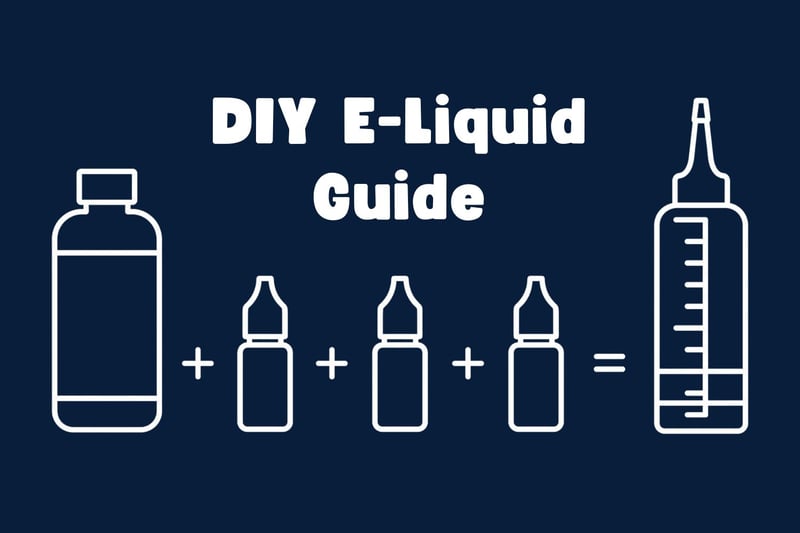
How To Mix Your Own E-Liquid: The Complete UK DIY Guide
Learn how to mix your own e-liquid with exact PG/VG ratios, flavour percentages, steeping times, cost maths and safety tips for UK vapers.
Why Has My Vape Lost Flavour? Vaper's Tongue & 8 Real Fixes
Lost your vape flavour? Learn what vaper's tongue is, how long it lasts, plus 8 tested fixes for coils, wattage, airflow and e-liquid. UK guide.
What Are Nic Salts? Nicotine Salts vs Freebase E-Liquid
What are nic salts? Learn how they differ from freebase, which strength and coil suit you, and how to get a smooth, satisfying hit.