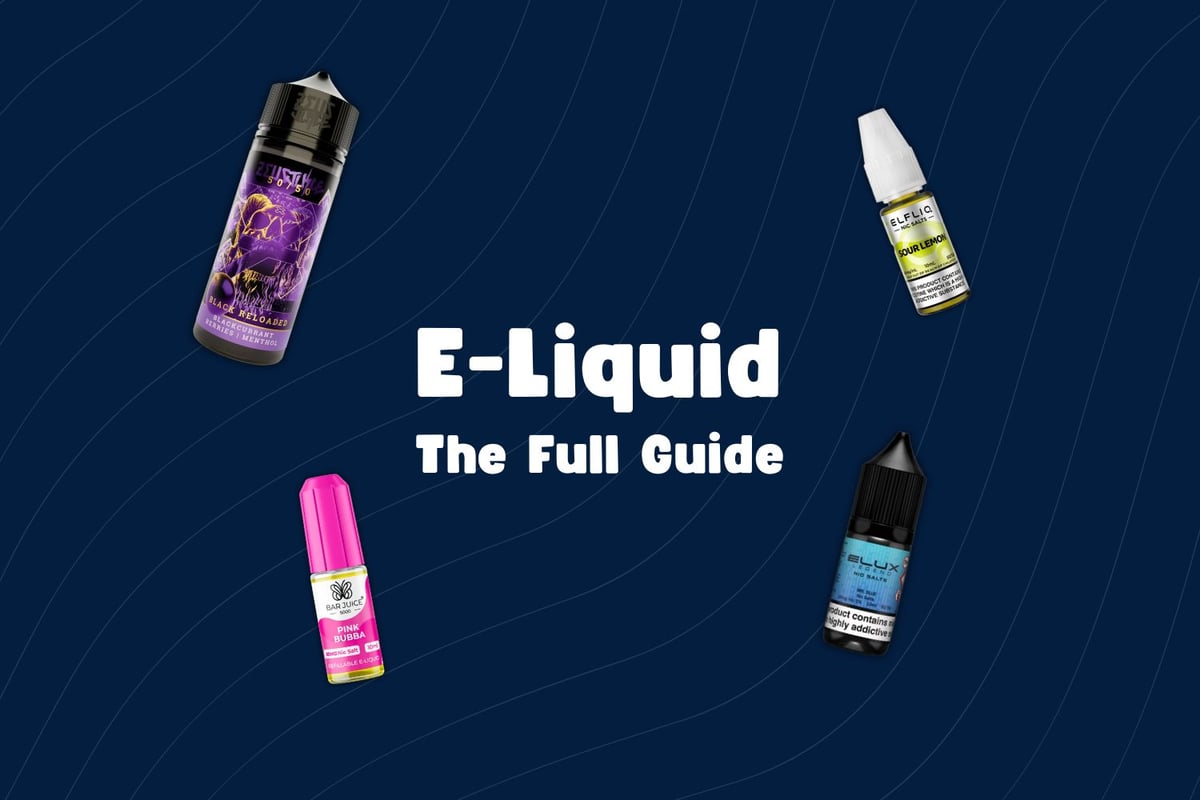
E-Liquid Explained: The Complete UK Guide

E-liquid is the part of your pod kit, pre-filled vape, disposable or box mod you actually inhale. Everything other part of your device, the kit, the coil, the wattage you set, is there to turn that liquid into vapour. Get the e-liquid for your kit right and the rest tends to sort itself out. Get it wrong and you are stuck chasing burnt coils and a throat hit that either does nothing or knocks your head off.
As I write this I'm enjoying the new Dojoliq Black Grape through an XROS 6 - it's pretty good... Anyway, here is the no-nonsense guide to e-liquid. What it is, what goes into it, nic salts vs freebase, how to read a label without second-guessing, which juice suits your device, and how the UK vape tax landing on 1 October 2026 changes what's worth buying. Whether you have just come off disposables or you have been refilling a pod kit for years, you will leave knowing exactly what to put in your tank.
What is e-liquid made of?
All vape liquid is made from 4 core ingredients.
Propylene Glycol (PG)
A thin, near-tasteless carrier liquid. It does the heavy lifting on throat hit and carries flavour sharply. The thinner texture wicks easily into small coils.

Vegetable Glycerine (VG)
A thicker, slightly sweet liquid. It produces the big, smooth clouds and softens the throat hit. More VG means more vapour and a gentler inhale.
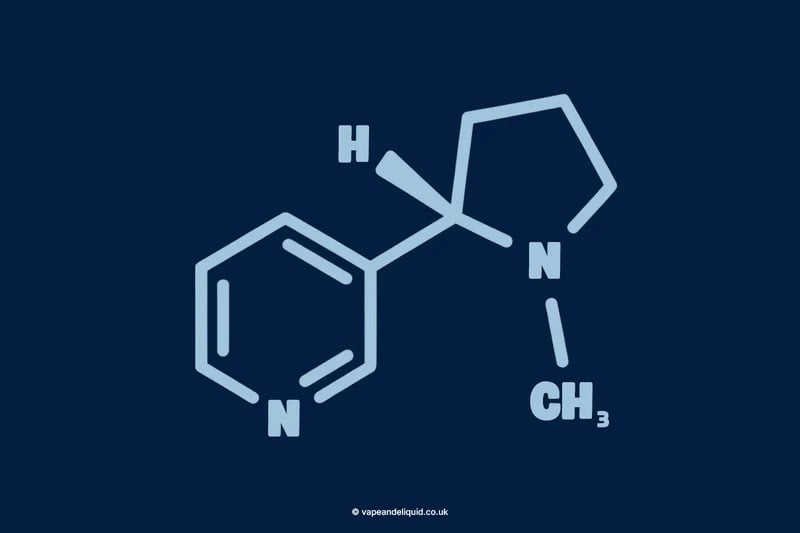
Nicotine
Optional, and capped at 20mg/ml in the UK. It provides the hit a smoker is used to, and comes as either freebase or nic salt, which feel very different (more on that below).

Flavourings
Food-grade concentrates that give the liquid its taste, from fruit and menthol to custard and tobacco.
Some liquids also carry a trace of distilled water to thin the juice slightly and help wicking, but it is a minor player.
Here is the bit that matters once you start buying for yourself. Those ingredients are not the interesting part on their own. It is the ratio between PG and VG that you actually feel. The lads on our team can tell a 50/50 from a 70/30 blind, just on the throat hit and how thick the vapour sits. A high-PG juice grabs the back of the throat and throws flavour at you. A high-VG juice is smoother and cloudier, but the flavour reads softer. Get that balance matched to your kit and everything else falls into line, which is exactly what the next section is about.
PG vs VG explained
The PG/VG ratio is the most important factor for any bottle of e-liquid, and most people buy the wrong one at least once. It tells you how thick the liquid is, how hard it hits, and crucially, which device it belongs in.
PG and VG do opposite jobs:
- PG (propylene glycol): Stronger throat hit, sharper flavour, thinner liquid that wicks beautifully in small, high-resistance coils. The more PG, the more you feel it on the inhale.
- VG (vegetable glycerine): Big, smooth vapour, gentler throat, thicker liquid. It can gunk a small coil faster because it is so viscous, so its used in a higher ratio on larger sub-ohm coils.
The common ratios you will see:
- 50/50: The all-rounder. Thin enough to wick in pods and MTL kits, with enough PG for a satisfying throat hit. This is what most nic salt & freebase 10ml bottles are.
- 60/40 and 70/30: More vapour, smoother inhale. The 70/30 split is the standard for shortfills for sub-ohm tanks.
- Max VG (80/20 and up): Big clouds with a very soft throat. For high-power kits and chasing vapour.
Our rule of thumb: 50/50 for pod kits and MTL, high VG for sub-ohm. Put a thick 70/30 in a tight pod coil and it will struggle to wick, leaving you with a dry, burnt hit. Run a thin 50/50 in a big sub-ohm coil and it leaks straight out of the airflow and spits hot juice at your face.
E-liquid nicotine strength explained
Nicotine strength is where most beginners go wrong, and getting it right is the difference between a satisfying vape and either a harsh, dizzying hit or one that does nothing at all. Strength is labelled two ways, and they mean the same thing:
- mg/ml: Milligrams of nicotine per millilitre of liquid. A 10mg bottle has 10 milligrams in every ml.
- Percentage: The same figure as a percentage. 10mg/ml is 1%, 20mg/ml is 2%. Here is the full conversion - screenshot this so you have a quick reference next time.
| Strength (mg/ml) | Percentage | Typical use |
|---|---|---|
| 0mg | 0% | Flavour only, shortfills before adding a shot |
| 3mg | 0.3% | Light use, sub-ohm / DTL |
| 6mg | 0.6% | Light to moderate, sub-ohm or MTL |
| 10mg | 1% | Moderate, pods and MTL |
| 12mg | 1.2% | Moderate to heavy, MTL |
| 18mg | 1.8% | Heavy, MTL |
| 20mg | 2% | UK legal maximum, heavy, MTL / pods |
The UK caps nicotine at 20mg/ml (2%). That is the legal ceiling under TPD rules, so if you find a bottle claiming more, it is not compliant, so it could have anything in and you should leave it on the shelf.
How strong should you go? It comes down to two things: how heavy your previous habit was (did you smoke a few ciggies each day, or hammer disposables?), and what device you run. Nic strength runs opposite to power:
- Low-power pods and MTL kits: These produce less vapour, so you want more nicotine per ml. If you were a light smoker, 10mg is usually plenty. Moderate to heavy, or coming from disposables, 10 to 20mg, usually as nic salts.
- High-power sub-ohm kits: These pump out far more vapour per puff, so you need far less nicotine. Stick to 3 to 6mg. If you put 20mg in a sub-ohm tank the throat hit will be brutal and you'll overdose on nicotine, leading to dizzyness, a headache, or even sickness. 0mg is a real choice, not a novelty. Plenty of vapers & ex-smokers run nicotine-free liquids for the flavour and the ritual - typically as an aid to quitting. Shortfills come as 0mg by default before you add a shot. & it's worth knowing that from 1 October 2026 the vape tax applies to 0mg liquid too, so nicotine-free is not a way around the duty.
On how a liquid feels - throat hit increases with nic strength - way more with freebase than nic salts. A 20mg freebase will be very course but a 20mg nic salt at the same strength is noticeably smoother, which is the whole reason salts took over the pod market.
Nic salts vs freebase nicotine
The type of nicotine in your bottle matters as much as the strength, because the two forms feel completely different in the throat at the same mg. Freebase nicotine is the traditional form & was the standard for years. It delivers a firm throat hit that gets harsher as the strength climbs. At 3 to 6mg in a sub-ohm kit it is smooth and pleasant. At 18 or 20mg it is a proper kick in the throat, even in an old-school pen kit, which is why high-strength freebase fell out of favour once salts arrived. Nic salts are nicotine in a modified form that stays smooth even at high strengths. A 20mg salt goes down far more easily than a 20mg freebase, and the hit feels faster and more satisfying, closer to what a smoker is used to. That smoothness at high mg is exactly why salts dominate pod and MTL vaping now. Coming off disposables, almost everyone lands on 10 to 20mg salts and stays there. You will also see hybrid nicotine on a few brands, a blend of salt and freebase that aims for high-strength smoothness with a touch more throat hit. A decent middle ground if you like a throat hit. Which should you choose?
- Pod kit or MTL, 10 to 20mg: Nic salts are now the standard. Smoother and more satisfying at the strength these kits suit.
- Sub-ohm tank, 3 to 6mg: Freebase. At low strength the harshness is a non-issue, and freebase carries flavour well in big coils. When nic salts first came out I was sceptical, and confused - because I'd been vaping firebase for years I couldn't comprehend how I can get more nicotine strength, with less throat hit - but I'll never go back for pod kits now.
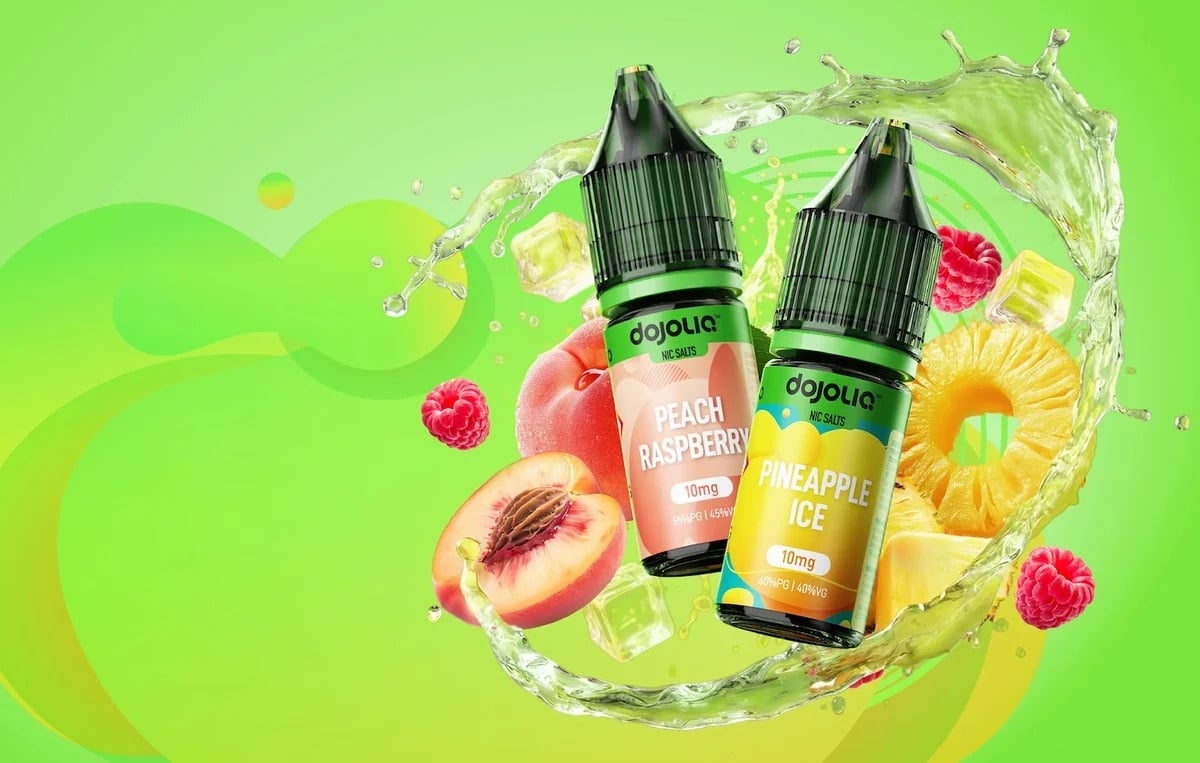
Types of e-liquid: every format explained
There are more types of e-liquid on the shelf than there used to be, largely because UK vape law shapes what can be sold and how. Once you understand the formats, choosing gets a lot simpler. Here is every one you will meet.
- 10ml nic salt. The default for most vapers now. Capped at 20mg, smooth even at high strength, made for low-power pods and MTL kits. If you have just come off disposables, this is almost certainly what you want. Usually a 50/50 ratio.
- 10ml freebase (usually 50/50). The classic 10ml bottle. More throat hit than salts, available from 3mg up to 18mg. Suits MTL kits and anyone who likes a firmer old-school hit. Same 10ml bottle, different nicotine form.
- Shortfill. A larger bottle of nicotine-free, high-VG liquid with deliberate empty space left at the top. Commonly 50ml of liquid in a 60ml bottle, or 100ml in a 120ml bottle. The high VG (usually 70/30) makes it a sub-ohm liquid. It is sold without nicotine because UK law caps nicotine-containing bottles at 10ml, so the gap is there for you to add a nic shot.
- Nic shot. A 10ml bottle of unflavoured 18 or 20mg nicotine, usually 50/50 or high-PG, that you add to a shortfill to bring it up to strength. The maths is: one 18mg 10ml shot dropped into a 50ml 0mg shortfill lands you at roughly 3mg in 60ml total. Add two to a 100ml shortfill for the same result in 120ml. This format only exists because of the 10ml nicotine cap. It is the compliant way to sell larger, nicotine-ready liquid.
- Longfill (one-shot). A flavour concentrate in a larger bottle that you top up with plain VG/PG base. You get more finished liquid per pound, which is why longfills are getting more mainstream as brands react to the incoming tax. They usually need steeping - letting the liquid rest for a few days after mixing to let the flavour mature.
- DIY concentrates. A flavour concentrate plus your own VG, PG and nicotine, mixed to your own recipe. Niche today, but we expect it to grow from mid-2026 as the duty makes pre-mixed juice noticeably more expensive. Total control over flavour and strength, more effort up front. Keep an eye out on our site, as we will be publishing our favourite e-liquid recipes we're currently experimenting with,
- Prefilled pods. E-liquid sealed inside a ready-to-use pod, no bottle involved. The closest like-for-like step up from a disposable, and the format least affected by the vape tax per ml because each pod holds so little liquid. Ideal if you want disposable convenience, but still more expensive overall than a pod kit with 10mls.
E-liquid flavours
Flavour is everything. Luckily the UK still has the full range available - and hopefully the government doesn't ban this either and push people back to smoking... theres typically a few categories that any liquid flavour is put into:
- Fruity: Berries, tropical, citrus. The most popular.
- Menthol and ice: Cooling hits, from light menthol to full-on frost, often layered over fruit.
- Tobacco: For switchers who want something familiar, from light blends to rich, dark notes.
- Dessert and bakery: Custards, cakes, biscuits - very sweet.
- Drinks and beverage: Cola, energy drink, coffee, fruit juice blends.
- Sweets and candy: Sherbet, gummy, hard-boiled sweet flavours. Flavour does not behave the same way across every setup. In a high-VG liquid at sub-ohm power you get a wall of vapour, and the flavour can read softer or sweeter, with dessert and fruit blends really opening up. In a tight MTL pod the flavour is more concentrated and direct, and menthol and tobacco tend to land sharper. The same juice can taste like two different things depending on the kit, which catches people out when they switch devices.
One to keep an eye on: the Tobacco and Vapes Act 2026 gives the government future powers over flavour names and descriptors. Nothing has changed yet, and adult flavour choice is fully intact today. Any change down the line is more likely to touch what a flavour is called, say a "Blue Raspberry" becoming a "Berry Ice", than to ban whole categories. Watch this space rather than worry about it.
How to choose the right e-liquid
Pull everything in this e-liquid guide together and choosing becomes a five-step decision.
- Start with your device. Pod or MTL kit, or sub-ohm tank? This decides almost everything that follows. Not sure? It comes down to your coil resistance: 0.8 ohm and above is MTL territory, under 0.6 ohm is sub-ohm.
- Pick your nicotine type and strength. Pod or MTL: nic salts at 10 to 20mg. Sub-ohm: freebase at 3 to 6mg. Match strength to your previous habit within those ranges.
- Pick your format. Pod or MTL: a 10ml salt or 50/50 freebase. Sub-ohm: a high-VG shortfill plus a nic shot, or 0mg if you vape nicotine-free.
- Match the VG/PG ratio. 50/50 for pods and MTL, 70/30 or higher for sub-ohm. The format usually sorts this for you, but check the bottle.
- Pick your flavour family. Fruit, menthol, tobacco, dessert, drinks or sweets. The fun bit, and the only step with no wrong answer. That is the whole process. Device, nicotine, format, ratio, flavour. Get the first four right and the flavour is just personal taste.
On price, this is where ordering online earns its keep. You get better value than the high street without the trip into town, and a refillable pod with bottled e-liquid works out far cheaper over time than living on prefilled big puffs. The maths only tilts further that way once the vape tax lands, which we get to next.
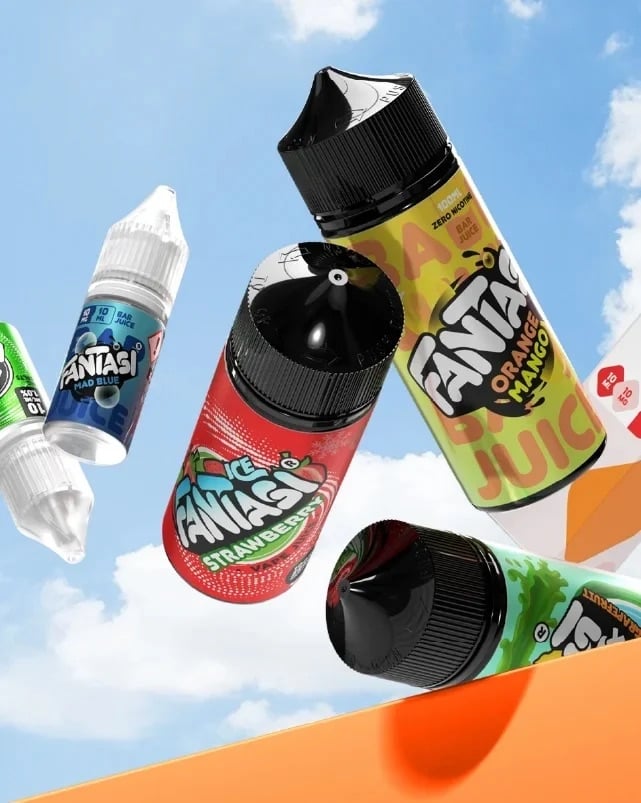
E-liquid and the 2026 vape tax
From 1 October 2026, every bottle of e-liquid sold in the UK carries a new Vaping Products Duty of £2.20 per 10ml, which is 22p per ml. Add 20% VAT on top and the real increase at the till is around £2.64 per 10ml. It applies to all e-liquid, including 0mg nicotine-free, with no exemption by strength.
The key thing to understand is that the duty is charged on volume, not nicotine. The more liquid in the bottle, the more tax it carries. That single fact reshapes which formats make sense:
- Small prefilled pods are barely touched. A 2ml pod carries about 44p in duty, roughly 7% on a typical pack.
- 10ml bottles roughly double. A 10ml bottle picks up the full £2.20, which on a typical £3 bottle is close to double.
- Shortfills are hit hardest. A 100ml shortfill plus two nic shots can take on up to around £26.40 in duty, an increase of up to roughly 147%.
This is exactly why interest is shifting toward prefilled pods, longfills and DIY mixing. Pods dodge most of the duty by holding so little - we argue this underminds the e-waste & disposable ban in the first place though. For sub-ohm, and maybe even MTL Longfills and DIY let you buy concentrate and, in theory, add your own cheaper base (although this technically is breaking the law - as we outline in our vape tax guide ) so you pay duty on less finished liquid.
That is the headline, but theres far more detail: registration, duty stamps and the sell-through window for pre-duty stock into 2027. We have broken all of it down, including the complete per-format breakdown and the dates that matter, in our vape tax guide. Worth a read before October if you buy any liquid.
Also, calculate the exact change to your e-liquid price with our Vape Tax Calculator.
E-liquid and UK law: TPD compliance
UK e-liquid is some of the most tightly regulated in the world, and that is actually a good thing for you as a buyer - because it gives peace of mind there is nothing harmful in the liquid being stocked by compliant retailers. The rules come from the TPD (the Tobacco and Related Products Regulations 2016).
- Maximum nicotine strength: 20mg/ml (2%). No nicotine-containing e-liquid sold legally in the UK goes above this.
- Maximum bottle size: 10ml for any nicotine-containing liquid.
- Maximum tank or pod capacity: 2ml. although there are clever work-arounds for this.
- MHRA notification. Every nicotine product must be submitted to the Medicines and Healthcare products Regulatory Agency before it can be sold.
- Child-resistant, tamper-evident packaging, and you must be 18 or over to buy.
The 10ml bottle cap is why nic salts come in small bottles. It is also why shortfills are sold nicotine-free: a 100ml bottle could not legally contain nicotine, so it sells at 0mg and you add a nic shot yourself.
Storage, shelf life and steeping
A bit of basic care keeps your e-liquid tasting as it should and stops you binning bottles early, and the fixes for the common problems are quick once you know them.
Storage. Keep e-liquid cool, dark and upright, with the lids tight. Away from sunlight, radiators and the windowsill. Heat and light degrade nicotine and flavour over time, so a cupboard or drawer is ideal. Shelf life. Most e-liquid lasts one to two years stored properly. Check the best-before date on the bottle. If a liquid darkens as it ages, that is almost always normal oxidation, not spoilage, and it is safe to vape, though very old high-nicotine liquid can lose a little strength and flavour sharpness. Steeping. Steeping is just letting a liquid rest so the flavours marry and mature. Dessert, tobacco and longfill liquids often improve with a few days to a couple of weeks in a cool, dark spot with the cap on. Fruit and menthol salts usually need no steeping at all. If a fresh dessert juice tastes a bit flat, give it a few days before writing it off.
Quick fixes for the problems we get asked about most:
- Burnt or dry hit: The coil was not primed. Drip a few drops onto a new coil, fill the tank and let it soak for five to ten minutes before the first puff, and do not chain-vape a fresh coil.
- Gunky coils dying fast: Usually sweet, high-VG liquids. They taste great but caramelise on the coil. Expect shorter coil life and clean or swap more often.
- Flavour faded: Often vaper's tongue, your palate going numb to a flavour you vape constantly, rather than a bad bottle. Switch flavours for a day and it usually returns.
- Leaking: Normally the wrong VG for the coil or an overfilled tank. Match the ratio to the kit and do not fill above the line. A quick word on safety. A small number of people are sensitive to PG and get a dry or scratchy throat. Switching to a higher-VG liquid usually sorts it. Keep all e-liquid well away from children and pets, and handle higher-strength nicotine sensibly.
Frequently Asked Questions
It depends entirely on how much you vape and what you vape it in. As a rough guide, a moderate pod or MTL user will get several days to a week out of a 10ml bottle. Sub-ohm and DTL kits chew through liquid far faster because they vaporise much more per puff, so a high-VG shortfill in a sub-ohm tank can disappear in a day or two. Track your own habit for a week and you will quickly know your run rate.
Slightly. Higher-strength freebase carries a peppery harshness that can flatten the more delicate, sweeter notes in a juice, which is one reason flavour chasers often run low nicotine or 0mg. Nic salts stay cleaner on the palate even at 20mg, so the flavour reads truer. If a liquid tastes harsh or muted, dropping the strength or switching to a salt version often sharpens the flavour right up.
Yes, and plenty of vapers do. Drop both into an empty bottle, give it a good shake and you have got a custom blend. Two tips from experience: match the VG/PG ratios so the mix still suits your kit, and start with a small test batch rather than ruining a full tank. Fruit and menthol blends are the easy wins, dessert mixes are more hit and miss. Certain combinations can lead to coils burning quickly, so its takes a bit of trial and error.
Not always, but strong flavours always leave a trace on the coil. Coils soak up flavour over time, so jumping from a rich custard or aniseed to a clean fruit will often carry a hangover of the old juice. It fades, but some combinations can be nasty. If the previous flavour was intense, a fresh coil gives you the new one at its best. For pod kits, the same logic applies to the whole pod. Menthol to lemon? fine. Bakewell Tart to Grape? Probably will be grim.
Yes, with a couple of rules. E-liquid counts as a liquid at security, so bottles need to be 100ml or under and go in your clear plastic bag (most 10ml and 50ml bottles are fine). Your vape device and any spare batteries must travel in your hand luggage, never in the checked hold, because of lithium battery regulations. Check the rules for your destination too, as a handful of countries restrict or ban bringing vapes in.
There is a sensible case for buying ahead. Sealed e-liquid stored cool and dark keeps for one to two years, so anything you buy before 1 October 2026 dodges the new duty for as long as that stock lasts. It is worth being realistic about how much you will actually get through in that window rather than over-buying, and salts and high-VG shortfills both store equally well. Our vape tax guide covers the duty, the dates and the sell-through window in full.
Not always. Price tends to track the brand, the quality of the concentrates and how long a juice has been matured, so a pricier bottle from a respected mixer often does taste cleaner and more layered. But there are excellent inexpensive liquids and plenty of forgettable premium ones, so price on its own is a poor guide to flavour. Read the reviews, trust your own palate, and judge a juice on how it vapes rather than what it costs.
Rinse empty bottles and pop them in your plastic recycling, and recycle the cardboard packaging as normal. Do not tip leftover e-liquid down the sink or drain, as nicotine is classed as a hazardous substance: soak small amounts into kitchen roll and bin it, or take larger quantities to a household hazardous waste point. Old coils and dead batteries should go to an electrical recycling point, not your general waste. Never put a lithium batter in household waste.
About the author

Guides in this topic
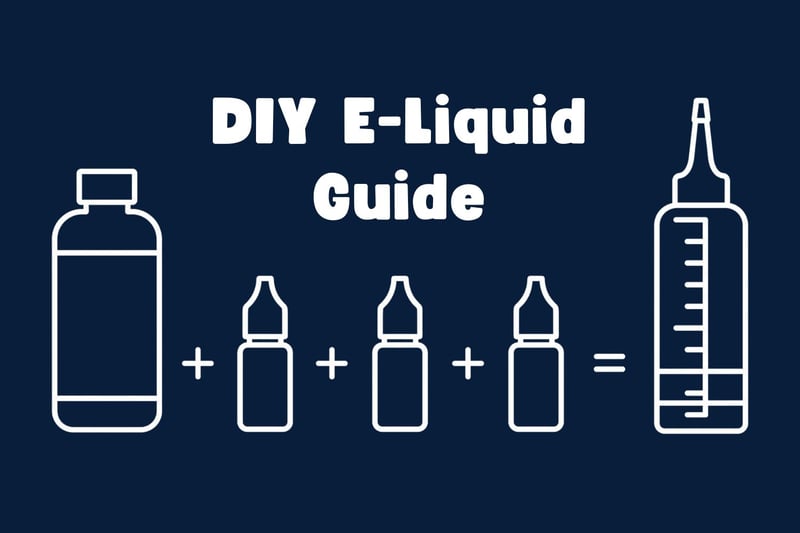
How To Mix Your Own E-Liquid: The Complete UK DIY Guide
Learn how to mix your own e-liquid with exact PG/VG ratios, flavour percentages, steeping times, cost maths and safety tips for UK vapers.
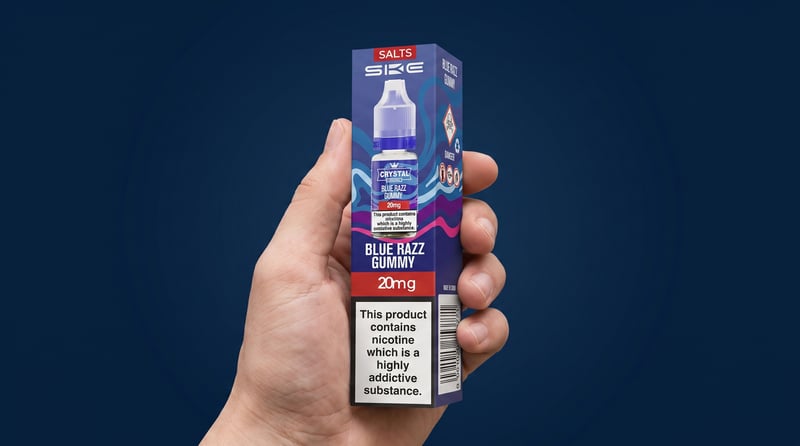
Why Has My Vape Lost Flavour? Vaper's Tongue & 8 Real Fixes
Lost your vape flavour? Learn what vaper's tongue is, how long it lasts, plus 8 tested fixes for coils, wattage, airflow and e-liquid. UK guide.
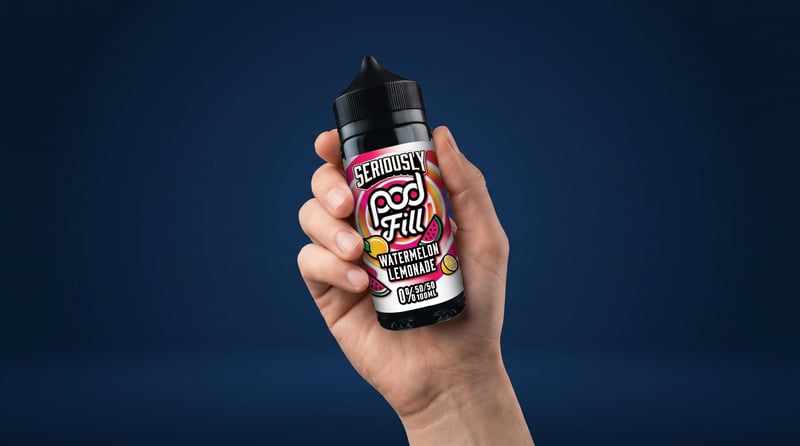
E-Liquid Steeping: The Complete Guide
How long to steep by flavour, every method ranked for speed vs safety, over-steeping warning signs and UK storage tips. The complete steeping guide.
What Are Nic Salts? Nicotine Salts vs Freebase E-Liquid
What are nic salts? Learn how they differ from freebase, which strength and coil suit you, and how to get a smooth, satisfying hit.
Understanding VG & PG in E-Liquid: The Complete Ratio Guide
Understanding VG and PG in e-liquid: what each does, which ratio suits your device, plus fixes for dry hits, leaking and burnt coils.
How To Match E-Liquid To Your Coil
Read the ohm number on your coil and we'll tell you exactly which e-liquid to buy. No more burnt hits, leaks or flat flavour. UK coil matching guide.