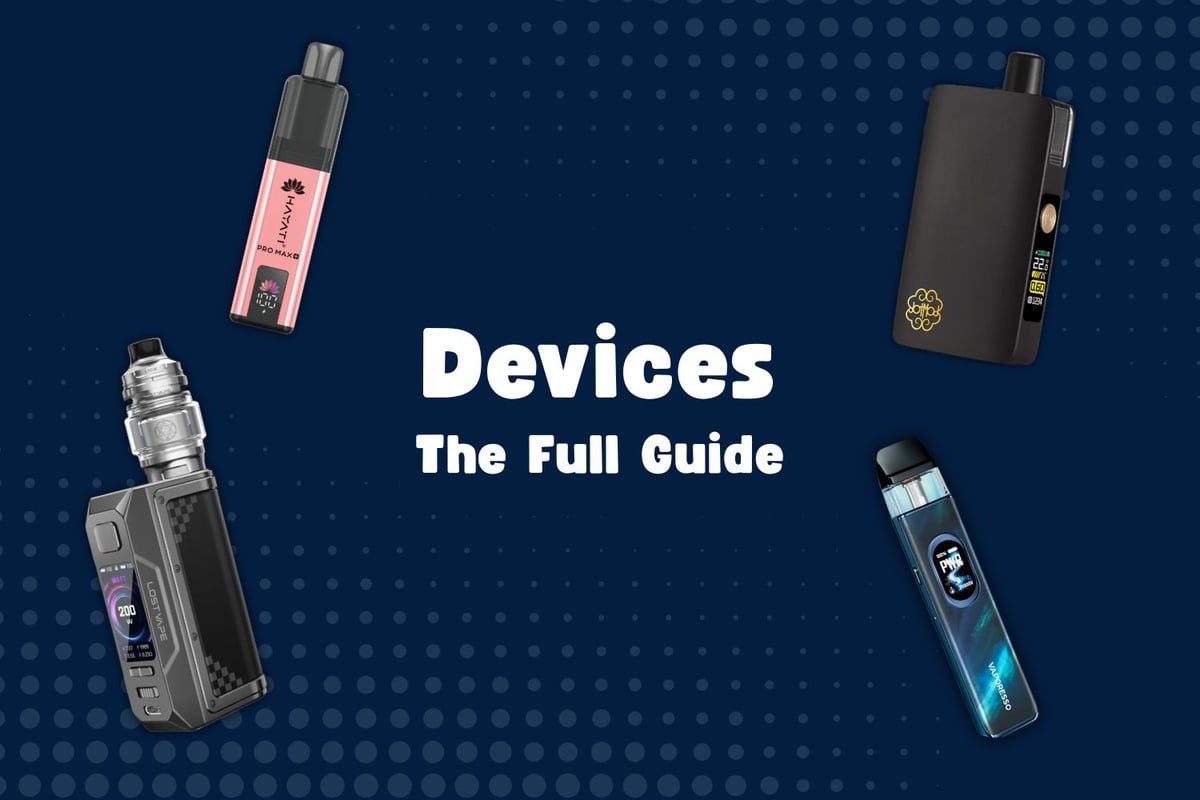
Vape Devices Explained: Coils, Tanks, Batteries & Pod Kits

The e-liquid is the fuel, but the kit, the coil, the battery and the airflow are what turn it into a vape. Pair a good device with the wrong coil and you get a burnt, leaky mess. Match a simple starter kit properly to your juice and it will be 1000x times better than an expensive one set up wrong.
We vape a huge range of different gear and this is our guide to vape devices: how a vape actually works, the kit you should buy in 2026, and coils, tanks and batteries explained without the jargon. We have all the gear with all the idea, so you don't need to go spending a penny on anything incorrect.
Disposables have been off the shelves since June 2025, so a refillable or prefilled pod kit is the default starting point now. Whether you have just swapped a disposable for your first pod kit, or you run a sub-ohm tank of an evening, we will help you sort out the kit that suits how you vape.
How does a vape device work?
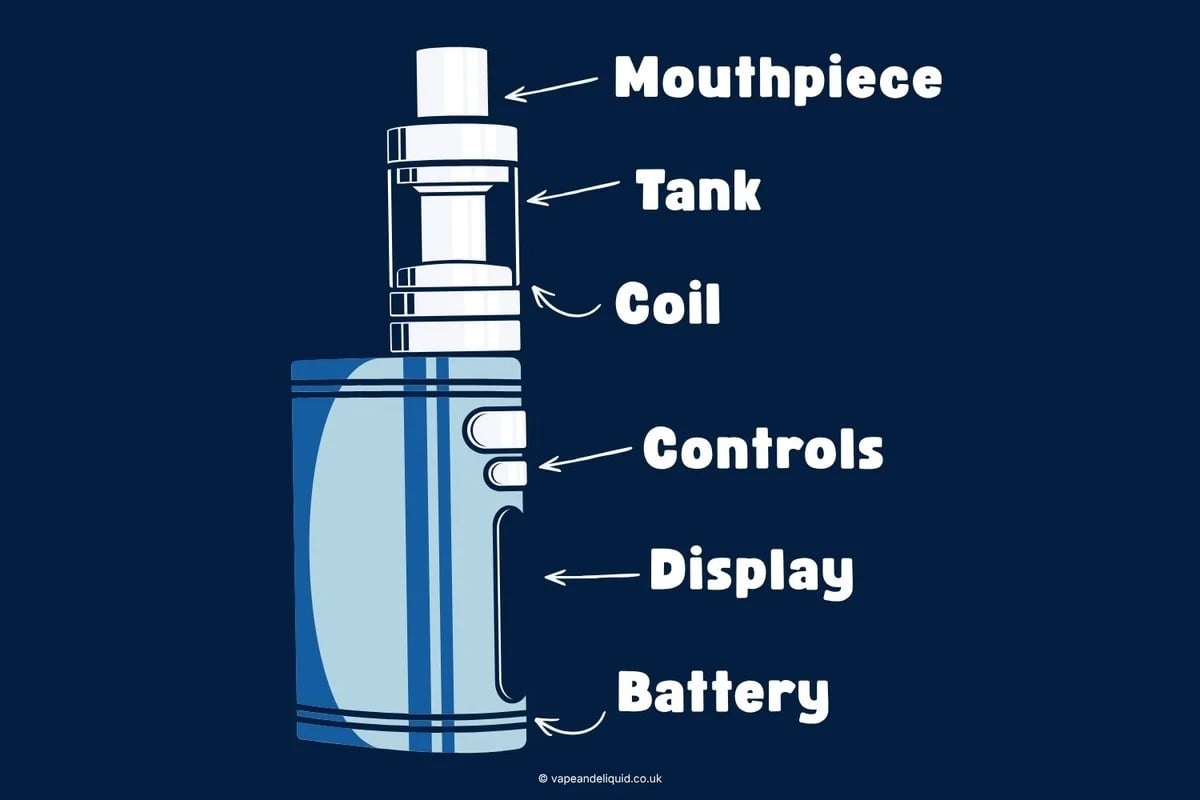
Every vape, from a 600-puff to a chunky sub-ohm mod, is built from the same four fundamental parts.
- Battery: the power source. Built into pod kits, or a separate cell in bigger mods.
- Tank or pod: the reservoir that holds your e-liquid.
- Coil: the heating element, a small wire-and-cotton part that does the actual work.
- Mouthpiece: the tip you draw from.
Depending on the device, it may have controls and/or a display, the functions and uses for these vary per device - but on the whole they are used to control wattage and other settings such as the vape mode or display theme.
For is a single puff, on any device: You activate the device, by drawing on it or holding a button. The battery sends power to the coil. The coil heats up and warms the e-liquid soaking into its cotton wick. That liquid turns to vapour, you inhale it, then exhale.
Nothing is burning. There is no flame and no combustion, so what you breathe in is vapour, not smoke. That is the fundamental difference between a vape and a cigarette, and it is why a worn-out or unprimed coil is the single most common cause of a nasty vape, because a dry wick scorches instead of vaporising.
The rest of this guide breaks each of those four parts down, starting with the device itself.
Types of vape device
There are four device types, and which one suits you comes down to how much faff you want and how you like to vape. Here is the current UK lineup, with our pros and cons for each.
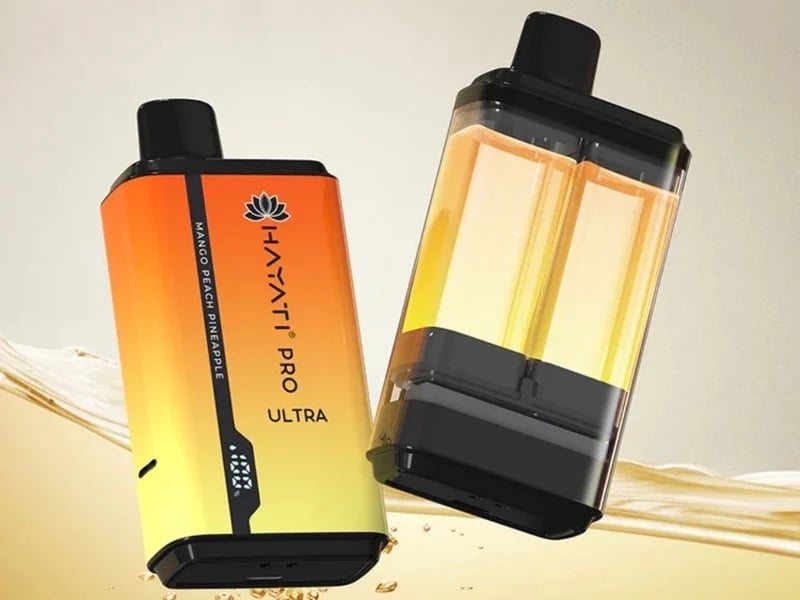
Prefilled pod kits (big puff kits)
The direct replacement for disposables, and where most people switching from a single-use device land. You get a rechargeable battery and a sealed, TPD-compliant 2ml pod, very often paired with a separate 10ml bottle of liquid that clicks into the device to top it up. Grab it, vape it, charge it, done.
- Pro: minimal setup, familiar flavours, near enough the disposable experience but legal and rechargeable.
- Con: you are tied to that brand's prefilled pods, and headline puff counts are lab figures, not what you will see in real use.
- Examples: Lost Mary BM6000, SKE Crystal, IVG Pro.
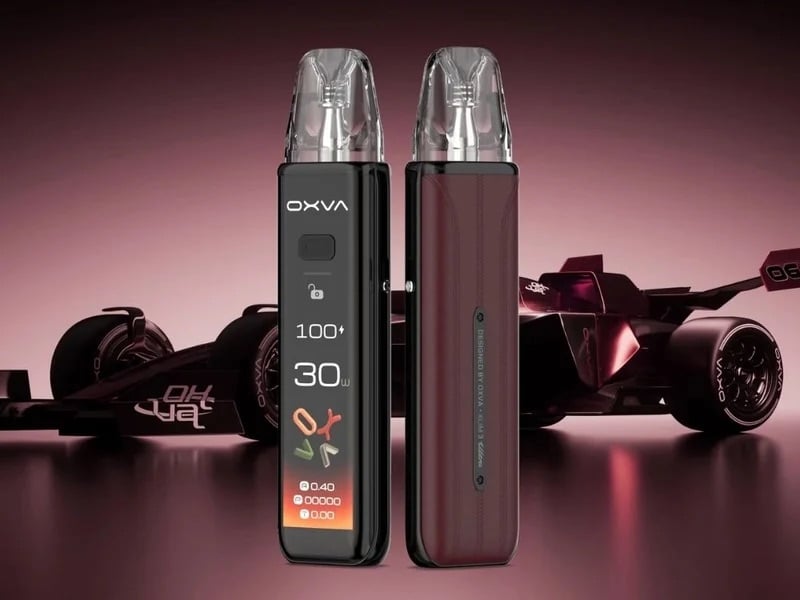
Refillable pod kits
You fill these yourself with any 10ml nic salt or freebase juice you fancy. This is the value sweet spot, and it only gets better once the 2026 liquid tax lands, because you are not paying duty on tiny sealed pods.
- Pro: best running cost, total freedom on flavour and strength, compact.
- Con: slightly more involved, you refill it yourself and swap a coil or pod every week or two.
- Examples: Vaporesso XROS 5, OXVA Xlim Pro, GeekVape Sonder Q.
Sub-ohm kits and box mods
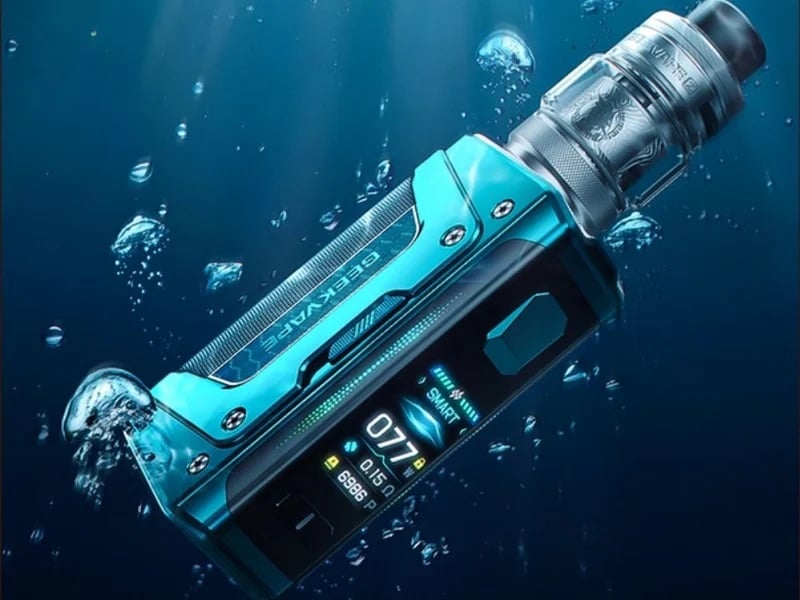
A bigger battery or a mod paired with a sub-ohm tank, built for direct-to-lung vaping on high-VG shortfills. More vapour, more warmth, more flavour from a bigger coil. This is the evening setup for a lot of vapers, including us. Regulated mods only, the kind with a chip and a screen.
- Pro: big clouds, rich flavour, adjustable everything.
- Con: larger, gets through liquid faster, not pocket-discreet.
Rebuildables (RTAs and RDAs)
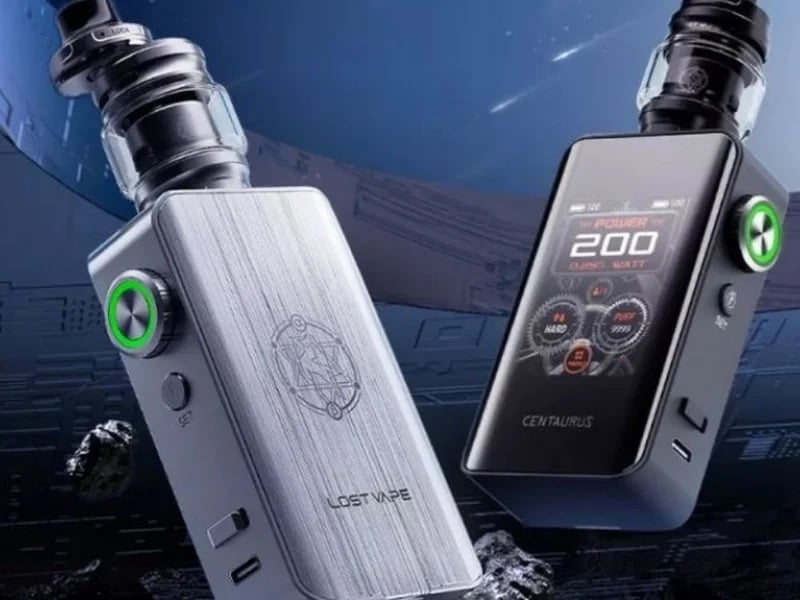
The most advanced way to vape. You build your own coil from resistance wire, wick it with cotton, install it in a rebuildable tank (RTA) or dripper (RDA), and dial in the resistance and wattage to taste.
- Pro: Cheaper running cost long term. Total control over flavour, vapour, and throat hit. Full DIY for experienced vapers.
- Con: Steep learning curve. You'll need a coil-building kit, an ohm reader, and a couple of weekends of trial and error.
Disposables: single-use vapes have been banned to sell since June 2025, so the prefilled and refillable pod kits above are what replaced them.
Vape coils explained
The coil is the part most new vapers ignore and then blame for a bad vape. Get your coils right and of your problems will likely disappear. Here is what you need to know, with the rebuildable kind covered later in the advanced section.
A coil is a small replaceable part, a length of wire wrapped around a cotton wick, and it is a consumable. You do not build it, you do not repair it, you replace it when it is spent, the same way you would a razor blade. A pack of coils costs next to nothing, and it is the part most worth staying on top of - for a clean and pleasant vape.
Coils are measured in ohms, which is just their electrical resistance, and that number tells you how the coil behaves.
- Sub-ohm coils (below 1.0 ohm, and really below about 0.6 ohm for proper DTL) run more power, give more vapour and a warmer hit, and want high-VG juice. These live in sub-ohm tanks and bigger pod kits.
- MTL coils (around 1.0 ohm and up) give a tighter, cooler, more cigarette-like draw, sip less power, and pair with 50/50 liquids and nic salts. These live in pods and pens.
You will also see mesh versus round wire. Mesh is a flat strip with more surface area, so it heats more evenly, wicks better and gives cleaner flavour. It is the standard now, and for good reason. Oldschool round wire still turns up in older or budget coils, but mesh is elite for even heating when the device is fired, preventing hot spots in the coil, which xan lead to early burnt flavour or spitting.
Two things people get wrong often:
- Priming a new coil. Drip a few drops of liquid straight onto the exposed cotton, fit it, fill the tank or pod, then leave it to soak for five minutes before your first pull. Skip this and you scorch a dry wick on the first draw, which gives you that flavour for the life of the coil.
- Knowing when to change it. A tired coil tells you. The flavour goes muted then turns burnt, vapour drops off, and you might see gunk on the cotton. Most coils last one to two weeks of daily use, sooner with dark or sweet juices. The moment a coil tastes like singed toast, it is done & you need to chuck it.
Vape tanks and pods explained
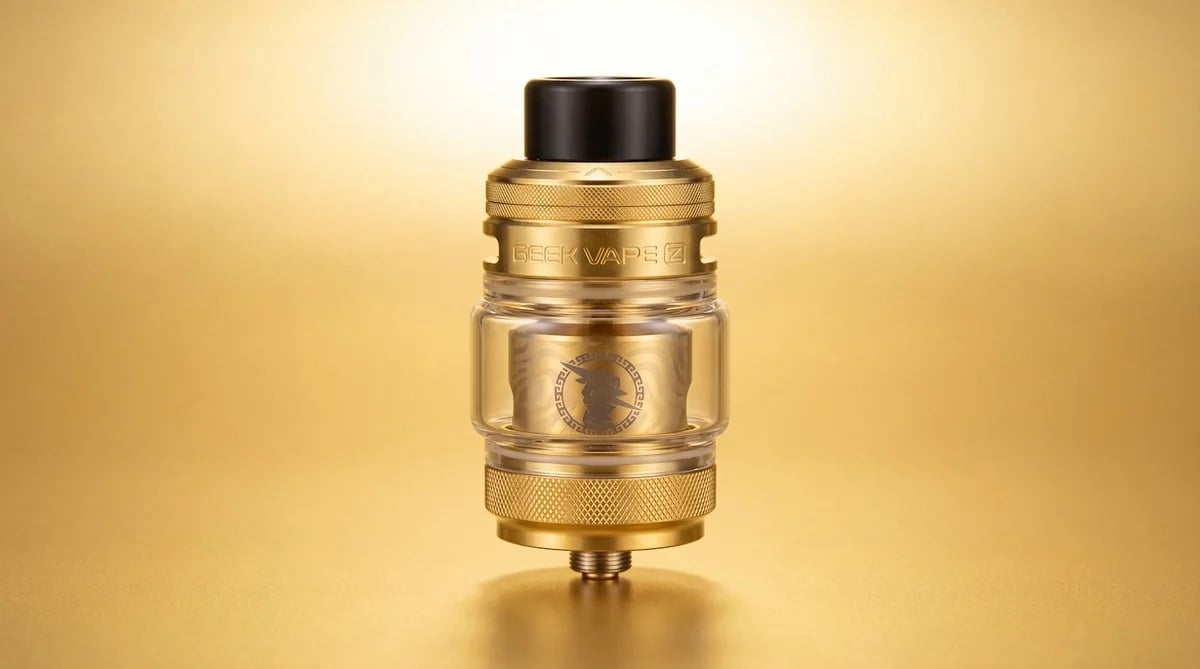
Your tank or pod holds your E-liquid, it houses the coil and its the mouthpiece you inhale from.
Tanks come in two types, both running ready-made coils:
- Sub-ohm tanks take low-resistance coils for DTL clouds and pair with high-VG shortfills. Bigger, airier, more vapour.
- MTL tanks take higher-resistance coils for a tight, cigarette-like draw and pair with 50/50 and salts. Smaller, more restricted.
Every tank and pod sold legally in the UK is capped at 2ml capacity under TPD rules, regardless of price or brand. You will also come across top-fill versus side-fill (top-fill is tidier), adjustable airflow rings, and glass versus plastic tanks (glass handles sweet and citrus juices better, plastic survives a drop).
Pods are the modern alternative, and where most people now start. A pod usually combines the tank and the coil into a single part, which keeps things simple. There are two kinds:
- Refillable pods: you add your own 10ml liquid and either swap a coil inside the pod or replace the whole pod when it is spent.
- Prefilled pods: sealed and ready to go, you swap the entire pod when it runs dry.
The draw comes down to the pod or tank you choose: a tight, restricted airflow for MTL, an open, airy one for DTL. Airflow makes or breaks flavour more than almost anything else. We have taken the same coil and the same juice, nudged the airflow ring two notches, and gone from a flat, warm draw to a crisp, cool one. If a setup tastes off, try adjusting the airflow before you blame the coil.
MTL vs DTL: which vaping style suits you
Your vaping style is the single decision everything else depends on, because it dictates your device, your coil and your e-liquid.
Mouth To Lung (MTL)
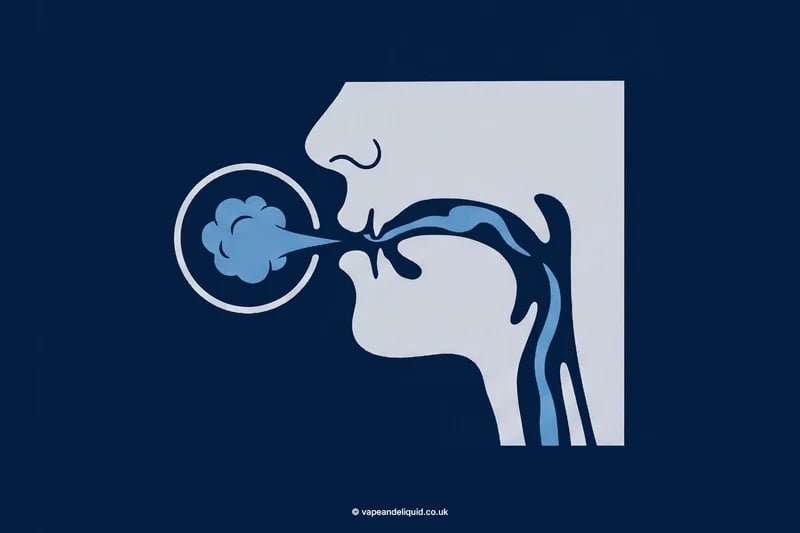
Mimics a cigarette. You draw the vapour into your mouth first, then breathe it in, against a tight, restricted airflow. It uses higher-resistance coils, 50/50 liquids or nic salts, and lives in pods and pens. If you have just come off cigarettes, this is almost certainly you, because it feels familiar and the throat hit from a salt scratches the same itch.
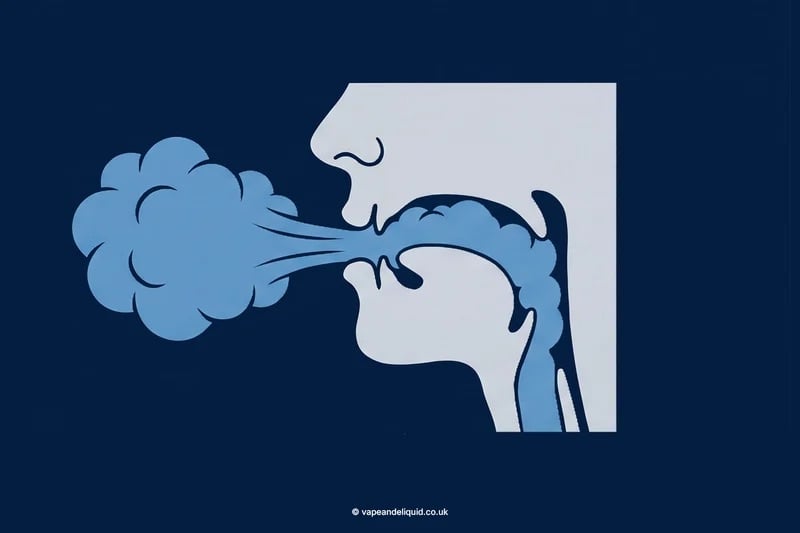
Direct To Lung (DTL)
Is the opposite. You draw the vapour straight into your lungs, like taking a deep breath, against an open, airy draw. It uses sub-ohm coils, high-VG shortfills, and lives in sub-ohm kits and mods. More vapour, more flavour, more warmth, and a smoother, less harsh hit because the nicotine is lower.
- Coming off cigarettes and want something familiar? Start MTL with a refillable pod kit and a nic salt.
- Chasing big clouds and rich flavour of an evening? Go DTL with a sub-ohm kit and a shortfill. Plenty of vapers, us included, run both: a pod kit by day, a sub-ohm setup at night.
Wattage, airflow and getting the best from your device
Two factors decide how your vape feels and performs, and on nearly all refillable kits you can play with both, on a pre-filled or big puff, these are locked at a default. Here is what wattage and airflow actually do, so you can dial a device in if you are moving away from big puffs:
- Wattage is how much power the device sends to the coil. More watts means more vapour and a warmer hit, but only within the range printed on the coil itself. Every coil has a recommended wattage band, and pushing past the top of it does not give you a better vape, it just cooks the coil and tastes burnt. Stay in the band and you are golden. These days many pods are auto-draw, set the device wattage or single-power, so there is nothing to set.
- Airflow is how much air mixes with the vapour as you draw. Open the airflow for an airy DTL pull and bigger clouds. Close it down for a tight MTL draw that feels more like a cigarette. It also shifts flavour and warmth: a tighter draw concentrates the flavour and warms it up, an open one cools and dilutes it.
A pod kit is mostly plug-and-play, but its fun to dial in your device to your exact preference. We have taken the same coil and same juice and, just by dropping the wattage a couple of points and nudging the airflow closed, gone from a hot, slightly harsh draw to a cool, flavoursome one. A few small tweaks transform a setup, so do not be afraid to experiment within the coil's range.
Rebuildables and mech mods
You will see terms like RDA, RTA and mech mod around in forums, on retail websites and shop chatter, This is a brief explanation only, not a how-to, because building coils, wicking and mech-mod safety is something that we will dive ino more detail in a seperate article.
- What "rebuildable" means: instead of dropping in a ready-made stock coil, you build your own. You wrap wire to a chosen resistance and thread cotton through it as the wick. The appeal is customisation, raw performance and a lower running cost. The price is time, skill and a pile of extra kit (wire, cotton, an ohm reader and a fair bit of patience).
- Rebuildable Dripping Atomiser (RDA): you build the coil and drip liquid straight onto it, no tank. Huge flavour and clouds, but you re-drip every few pulls, so it is great for a tinkerer who is sat at a desk all evening.
- Rebuildable Tank Atomiser (RTA): the same self-built coil, sat inside a tank that feeds it, so you are not constantly dripping. The usual middle ground. A Rebuildable Dripping Tank Atomiser (RDTA) is a hybrid of the two.
- Mechanical Mods (Mech Mods): unregulated devices with no chip and no safety circuitry, where the battery fires the coil directly. Without circuit boards or screens, there is virtually nothing to break. If a part gets dirty, you can take it apart and clean it, and some argue power delievry is more instant. But in our experience they offer nothing a regulated mod does not, beyond a steep learning curve, because there is no short-circuit or over-temperature protection to catch a mistake.
Who they suit, and who they do not: experienced hobbyists who enjoy the building as much as the vaping. For everyone else, a modern mesh stock coil in a regulated kit delivers cracking flavour and vapour with none of the faff or risk. You do not need to go rebuildable to get a brilliant vape.
How to choose the right vape device
Picking a device is easier than you might think. Just work out how you want to vape, and nearly any kit from the mainstream brands suited to that style will be great.
- Want grab-and-go, just came off disposables? A prefilled big puff pod kit. Familiar, minimal setup, MTL draw.
- Want the best value and happy to refill? A refillable pod kit. The running cost is far better, more so once the liquid tax lands. Still an easy MTL draw with a nic salt.
- Want big clouds and a richer evening vape? A sub-ohm kit with a high-VG shortfill. DTL, more vapour, more flavour.
- Want simple and discreet above all? A vape pen or small pod. Tight MTL, pocketable, no fuss.
Tie that to your e-liquid and you are sorted: MTL kits want 50/50 and salts, DTL kits want high-VG shortfills. Our E-Liquid guide covers strength and VG ratios in full.
On cost, refillable kits work out better value than prefilled big puffs over time. Once vape duty tax hits liquid in October 2026, we will see a shift in the market, because shortills will see the biggest price hike.
The 2026 vape tax impact on devices
Regarding the 2026 Vape Tax vape hardware is not taxed. The Vaping Products Duty coming in 2026 applies to e-liquid only. Your device, coils, pods, tanks, batteries and accessories that do not contain any liquid all sit outside the duty - so their prices will be unaffected.
The duty starts on 1 October 2026 at £2.20 per 10ml, which works out around £2.64 once VAT is added on top. That affects the liquid going into your device (or pre-filled pods), not the device itself.
Vape devices and UK law
The UK has strict laws and regulations for vape devices. Here is what applies today, and what is coming.
In force right now:
- Disposable ban: single-use vapes have been illegal to sell since 1 June 2025, UK-wide. Only single-use devices are banned. Rechargeable, refillable kits and prefilled pod kits with swappable pods are perfectly legal, which is why the market is now built around them.
- 2ml capacity limit: every tank and pod is capped at 2ml under TPD rules.
- MHRA notification: nicotine-containing products and their pods must be notified to the MHRA before sale, with child-resistant, tamper-evident packaging. Strictly 18+ to buy.
The Tobacco and Vapes Act 2026 received Royal Assent on 29 April 2026. It brings a UK-wide vape advertising and sponsorship ban (pending commencement), a mandatory retail licensing scheme, and powers over flavours, packaging and shop displays. Most vape provisions need secondary legislation before they progress.
Two device proposals were debated but did not make the confirmed Act, and you may see them reported as if they are rules. They are not:
- A proposed £30 minimum price on all vape products, including individual coils and pods.
- A proposed ban on prefilled single-use pods.
Neither is law... yet. The government has committed to consultation, so both are unconfirmed - we cannot see the £30 minimum becomming reality as it would fuel a black market - however following VPD, 600-puff prefilled pods will likely jump in popularity - resparking the E-Waste debate that got disposables banned in the first place, so prefilled pods may be next on the chopping block.
Looking after your device: care, cleaning and battery life
A vape that is looked after performs better and lasts longer, and most of the upkeep takes seconds. Here is the maintenance routine that keeps a kit running sweet.
- Keep the contacts clean and dry. Wipe the battery contacts and pod connection points with a dry cotton bud now and then. Grime and stray liquid here cause weak power and dodgy connections.
- Wipe the tank or pod when you refill. A quick clean of the threads and the outside stops gunk building up and keeps the seals seating properly.
- Change coils on time. Do not flog a dead coil. A fresh one costs peanuts and a burnt one ruins every vape until you swap it.
- Charge smart. Top up little and often rather than always running flat to zero, which is kinder to the battery over the long run. Avoid leaving a device on charge overnight unattended.
- Store it out of heat and sun. Heat is the enemy of both liquid and batteries. Keep your kit out of hot cars, off sunny windowsills and away from radiators.
Troubleshooting common device problems
Most device problems have the same handful of causes, and almost all are a two-minute fix. Here are the usual suspects.
- Burnt or harsh hits: nearly always an unprimed or worn coil. Prime a fresh one properly and give it five minutes to soak, or replace a spent one. Do not chain-vape a brand-new coil, let the wick keep up.
- Leaking, spitting or gurgling: usually an overfilled tank, the wrong VG for the coil, the airflow open too far, or an o-ring that has not seated. Check the fill level, the seals and the airflow ring.
- Device not firing, or auto-firing on its own: dirty contacts, a stuck fire button, or a pod that has not clicked fully into place. Clean the contacts and reseat the pod.
- Weak vapour or flavour: a tired coil, a low battery, or airflow and power set wrong. Work through those three in order.
- Not charging: check the cable and the charging port for pocket lint, and try a different USB-C lead before you assume the device is dead. The cable is the culprit far more often than the kit.
Frequently Asked Questions
No. Pods and coils are device-specific. Each kit takes its own pod or coil series, and a different brand simply will not seat or seal correctly, even if it looks close. Check the model name printed on the coil or pod against your kit before you buy, and when in doubt, buy the matching pack.
On many modern pod kits with pass-through charging, yes, you can vape while it tops up. It is gentler on the battery to let it finish first, though, and you should only ever use a quality cable and plug. If a device gets noticeably hot on charge, unplug it and let it cool before you carry on.
A nightly top-up is fine, lithium cells cope with it well. What actually wears a battery faster is regularly running it flat to nothing, leaving it on charge for days, or letting it cook in heat. Topping up little and often is kinder than deep draining it every time.
Vapes and spare lithium batteries must go in your hand luggage, never the hold, and you cannot use or charge a vape on board. Carry spare 18650 or 21700 cells in a case rather than loose. Always check your airline's specific rules before you fly.
A little warmth is normal. The coil is heating liquid, and some of that heat carries into the body of the device, more so on higher-power sub-ohm kits and during heavy use. Properly hot, a burning smell, or any swelling is not normal, so stop using it and set it down well away from anything flammable.
Vapes are electrical waste and should not go in the household bin. Many vape shops and supermarkets run take-back schemes or battery recycling points, and councils accept small electricals at recycling centres. Remove the battery where the device allows it, and never bin loose lithium cells.
Sometimes, but not always. You often pay more for a bigger battery, better build quality, adjustable airflow or nicer materials, all of which can be worth it. Plenty of mid-priced kits outperform premium ones for everyday vaping, so match the kit to how you actually vape rather than to the price tag.
For a day or two, fine. Left much longer, liquid can seep into the airflow and the coil keeps wicking, which dulls the flavour and can cause a leak or a slightly stale first puff. If you are putting a device away for a while, it makes sense to empty the tank or pod first.
About the author

Guides in this topic
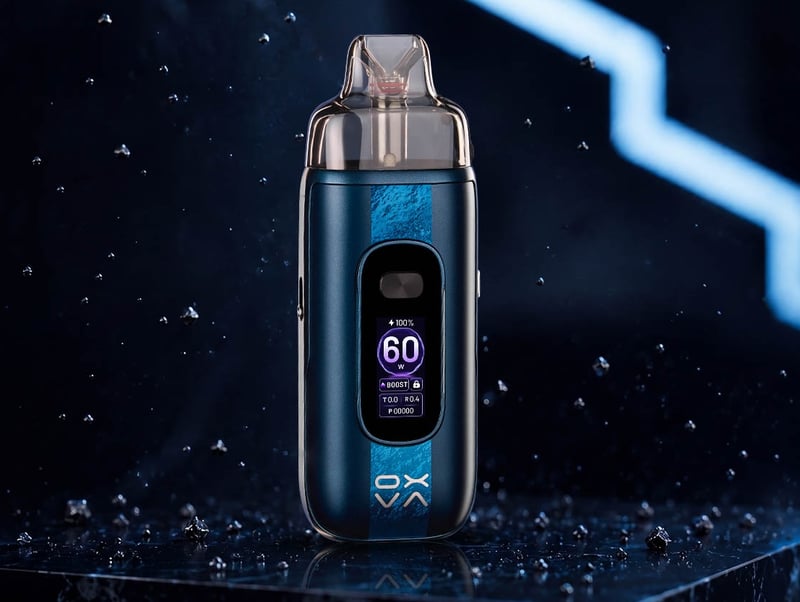
How To Make Your Vape Battery Last Longer
Make your vape battery, coils and juice last longer. Charging habits, the airflow answer, coil-saving tips and device-by-device advice for UK vapers.
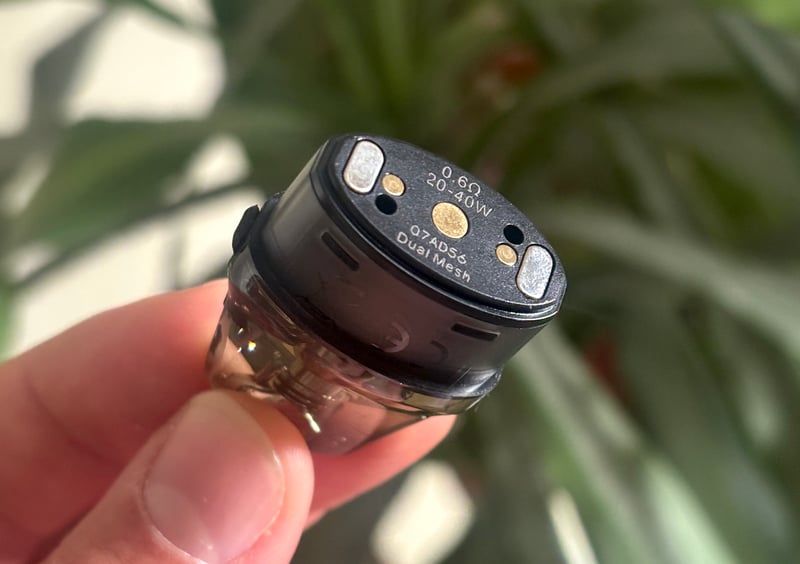
What Does Ohm Mean On A Vape? Resistance, Wattage & Coils Explained
What does ohm mean on a vape? Learn coil resistance, ideal wattage per ohm, sub-ohm vaping and MTL vs DTL, so you pick the right coil and e-liquid.
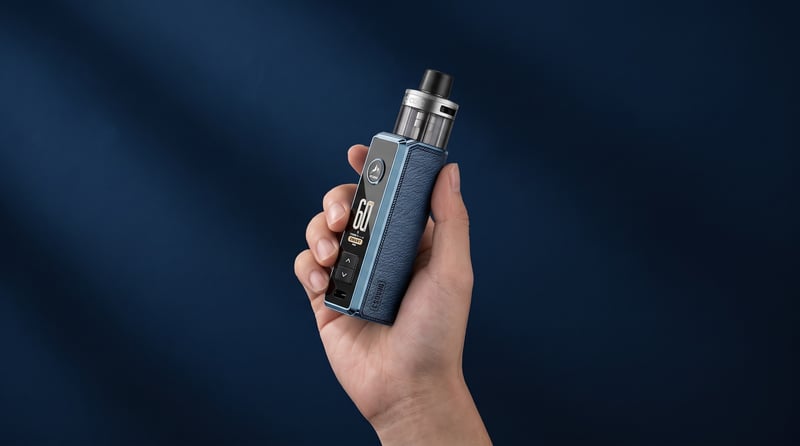
What Wattage Should I Vape At? A Guide to Getting It Right
Answer 'what wattage should I vape at?' with our UK guide: match ohms to watts, tips for nic salts and fixes for burnt or gurgling hits.
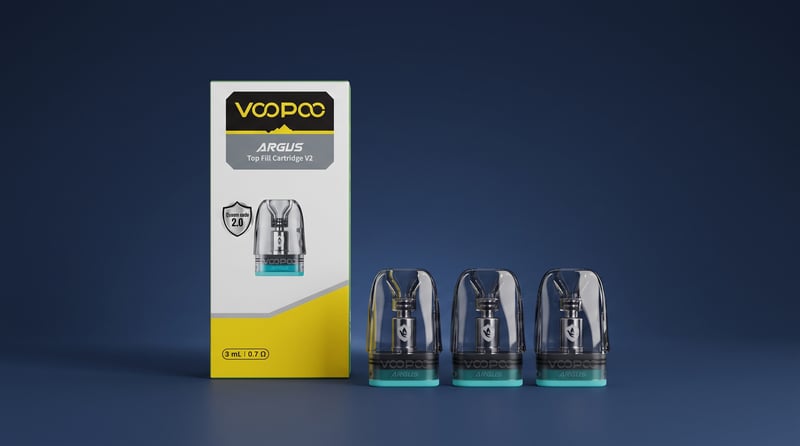
Vape Pod vs Coil: What's the Difference (And Which Do You Need)?
Vape pod vs coil - what's the difference? Learn built-in vs replaceable coils, Geekvape XM vs Z codes, cost, flavour and troubleshooting to find your fit.
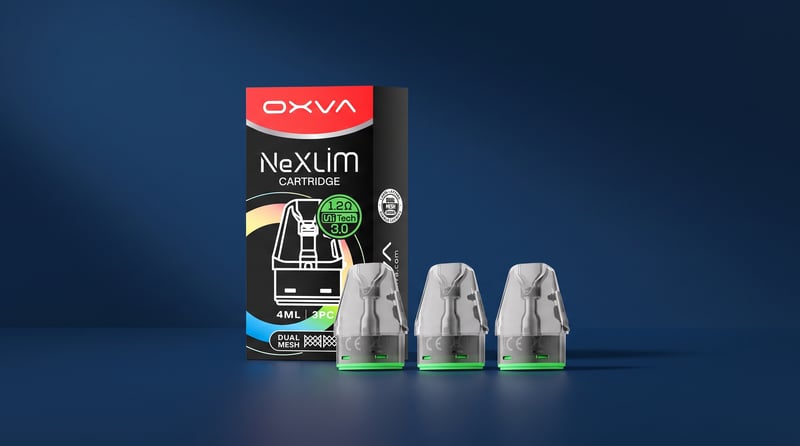
How Long Do Vape Coils Last?
How long do vape coils last? Get puff benchmarks, Vaporesso/SMOK/Voopoo lifespans, cost-per-week ROI and proven tips to make coils last longer.
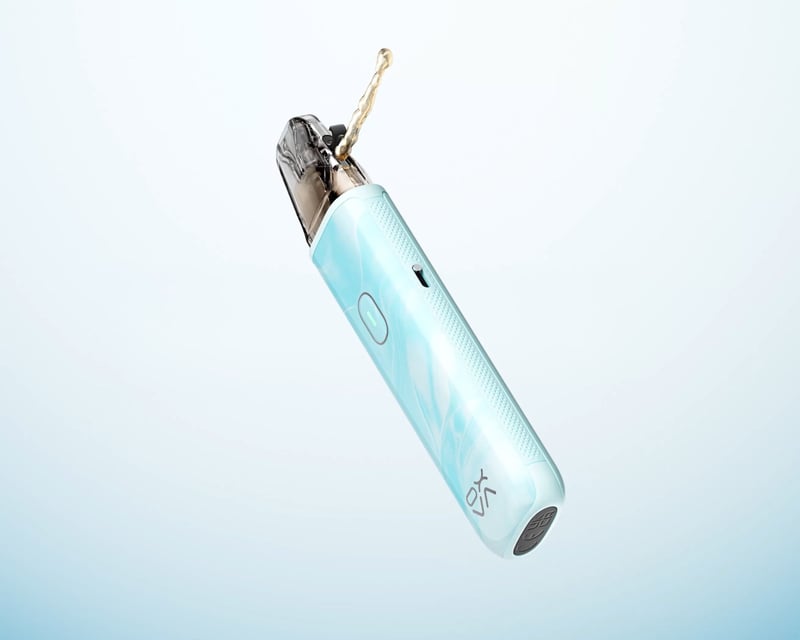
How to Prime a Vape Coil / Pod
Priming a vape coil or pod stops a burnt first hit. Our step-by-step guide covers coils, sealed pods, wait times and specifics for popular beginner kits.